


Factory Supplier's Household Aluminium Foil Roll Food Grade Metal Foil
Description
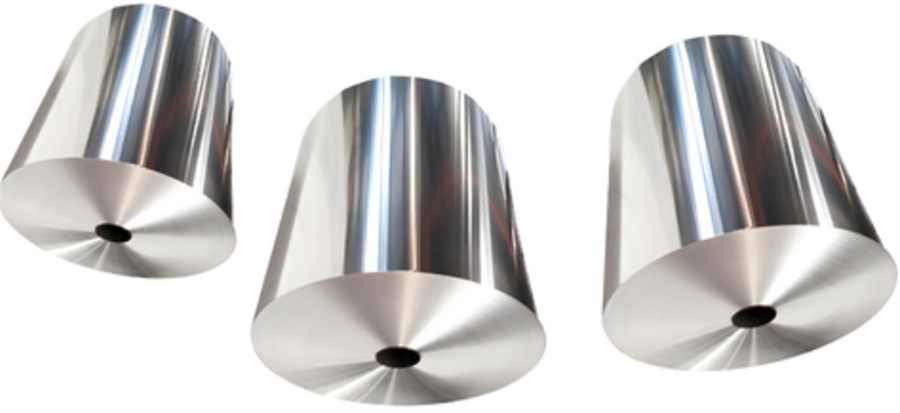
We employ a precise, controlled application method-a key feature-using food-grade lubricants to withstand the intense friction and high temperatures generated between the aluminum blank and the forming die. The aluminum foil supplied by Jufeng comes pre-coated with a uniform layer of lubricant, enabling customers to maximize stamping speeds, significantly extend die life, minimize scrap, and produce containers of superior quality and exceptional consistency; these advantages make our aluminum foil a vital raw material for the global metal container industry.
|
Type |
Aluminium Foil for Food Container Application |
|
Application |
For different food container applications, Such as dishes, plates, trays etc |
|
Grade |
Food Grade |
|
Alloy |
3003/8011/8006 |
|
Temper |
H22 H24 H18 O |
|
Thickness |
0.03MM-0.15MM |
|
Width |
200MM-1300MM |
|
Surface |
Both sides bright |
|
Packaging |
Free Fumigated wooden box |

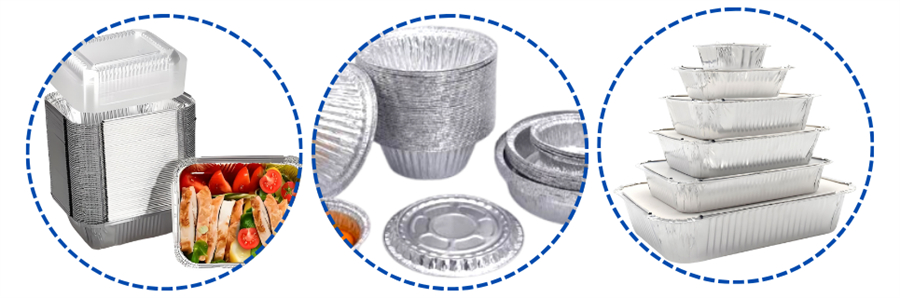
Jufeng's lubricated container foil serves as a core raw material for manufacturing a wide range of aluminum packaging solutions. This foil is versatile, catering to applications such as food containers and trays (for ready-to-eat meals, takeout, airline catering, and frozen foods), baking containers (pie pans, quiche dishes, and various baking trays), specialized containers for pet food, dairy products, and ready-made desserts, as well as lidding and sealing materials. Engineered specifically for high-speed mechanical stamping, the product supports processes such as impact extrusion, deep drawing, and multi-stage forming, enabling the rapid transformation of flat foil sheets into three-dimensional containers.
Key Markets
Demand for this specialized product is concentrated in regions with robust manufacturing sectors and active food processing industries. Major markets include North America (USA, Canada), Western Europe (Germany, France, Italy, the UK, and Spain), and the Asia-Pacific region (Japan, South Korea, Australia, and China). Additionally, demand is rising in the Middle East (GCC countries) and Latin America (Brazil and Mexico) alongside the growth of their foodservice sectors. We sell our foil products directly to container manufacturers and major converters, who in turn supply aluminum foil materials to leading global food and packaging companies.

Services Offered by Jufeng
Choosing Jufeng means partnering with technical experts dedicated to enhancing your forming processes and operational efficiency. We provide application engineering support to help you select the optimal alloy grade, temper, gauge, and lubrication formula based on specific container designs and stamping equipment parameters, thereby maximizing tool life and production yields. Our vertically integrated production process prioritizes material consistency-a critical factor in ensuring the success of large-scale stamping operations and maintaining stable results across production batches.
FAQ
1. Can we apply lubricant to the aluminum foil ourselves during the printing process?
You can, but the coating may lack uniformity (consistency) and precision. Our pre-lubrication process offers significant advantages:
Uniformity-The coating is applied evenly to both sides of the foil, a result difficult to achieve with spray or roller coating on a printing press.
Cleanliness and Control-It eliminates overspray, misting, and uneven application during printing, thereby preventing potential print quality issues.
Optimization-The type and quantity of lubricant are scientifically tailored to specific foil materials to ensure optimal print quality.
Efficiency-This step is completely removed from the production line, simplifying the process and eliminating the risk of downtime associated with adding this extra step.
2. How should I choose between 3003 and 8011 aluminum alloys for container manufacturing?
3003 aluminum alloy is the most commonly used alloy for food containers and general packaging applications. By adding manganese to pure aluminum, this alloy achieves the necessary strength and excellent drawability, making it the industry standard for drawn containers requiring moderate rigidity and/or stackability.
8011 aluminum alloy is primarily used for applications with performance requirements that differ from those of 3003 alloy. For instance, it is selected for specific batches of lids or containers that require particular post-forming characteristics or surface finishes. To select the right alloy, the best approach is to contact our technical team; we can provide professional advice based on your container design and other performance requirements.
3. Is the lubricant safe? Is cleaning required after forming?
The lubricants used are food-safe and comply with FDA and EU standards for indirect food contact. If the finished container is used to hold food that is already packaged or to hold dry/baked goods, post-forming cleaning is usually unnecessary. However, if the container will come into direct contact with liquids or oily foods, the brand owner may recommend a cleaning process. We provide recommendations tailored to the specific lubricant type and end-use application.
4. What happens if the amount of lubricant on the aluminum foil is excessive or insufficient?
Both excessive and insufficient lubricant levels can create production challenges.
Excessive lubricant-can lead to production issues, such as blanks being difficult to handle due to slippery surfaces or contamination in the stamping area. If not managed correctly, excess lubricant can also cause problems in downstream processes like printing and coating.
Insufficient lubricant-can result in a range of production issues, such as excessive friction causing the aluminum to stick to the die, scratches or scuffs, poor metal flow, container rupture, and accelerated die wear.
Our process controls ensure that the coating weight is optimized for your specific production process.
5. Can we customize lubricants for uniquely shaped containers or new alloy materials?
Absolutely! Our R&D and technical service teams specialize in collaborating with customers to develop custom lubricants. By adjusting the lubricant's chemical composition, viscosity, and coating weight-and testing under simulated or actual production conditions-we can create a tailored lubrication solution. This solution not only addresses specific forming challenges and delivers superior surface finishes but also makes new alloy materials a viable option, thereby enhancing the efficiency of your container manufacturing process.


