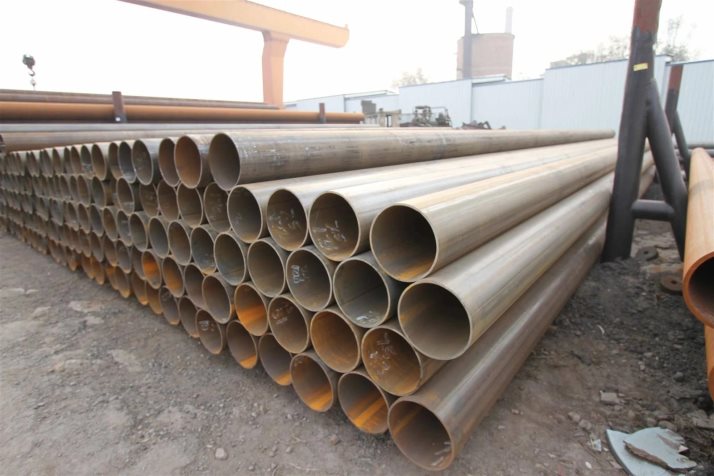


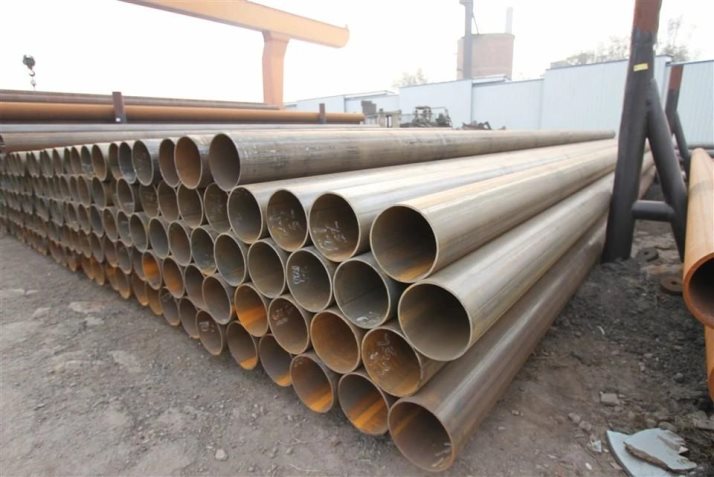
ERW Welded Steel Pipe ASTM A333 GR. 6

Product: ASTM A333 Gr. 6 LTCS ERW Pipe
Standard: ASTM A333 / ASME SA333
Grade: Grade 6 (Low Temperature Carbon Steel)
Process: Electric Resistance Welded (ERW)
Application: Designed for low-temperature fluid service down to -46°C (-50°F).
Certification: Guaranteed impact tested (Charpy V-notch) to ensure ductile behavior in cryogenic environments. Suitable for LPG, LNG, and chemical processing plants.
*Note: Always ensure the Mill Test Certificate (MTC) clearly shows the Impact Test results at -46°C, as this is the non-negotiable quality proof for this material.
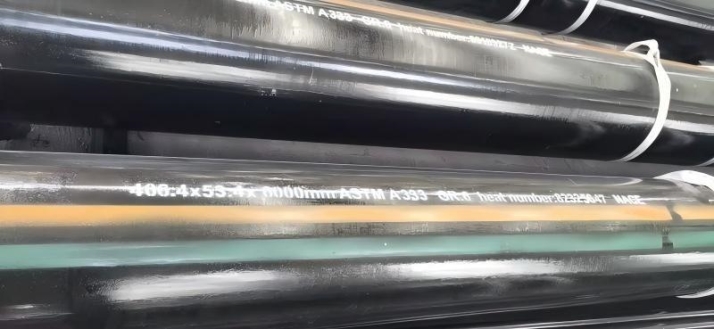
"ERW" (Electric Resistance Welding)
The Manufacturing Process:
1.Raw Material:A hot-rolled steel coil (specifically A333 Gr. 6 chemistry) is uncoiled and slit to the required width.
2.Forming:The flat strip is passed through a series of forming rollers to cold-form it into a cylindrical shape, creating an "open seam" tube.
3.Welding:The edges of the tube are heated usinghigh-frequency electric resistance. The edges are pressed together under pressure to forge a bond.No filler material is usedin this process.
4.Sizing & Inspection:The weld seam is heat-treated to refine the grain structure (critical for low-temperature performance), and the pipe is sized, cut, and subjected to non-destructive testing (NDT) such as ultrasonic or hydrostatic testing.
ERW vs. Seamless:
ERW is generally more cost-effective and has tighter dimensional tolerances (consistent wall thickness and roundness) compared to seamless pipes-6.
For A333 Gr. 6, both manufacturing methods are accepted by the standard, provided they pass the same mechanical and impact tests.
What is ASTM A333 Grade 6?
ASTM A333 Grade 6 is the standard specification for Seamless and Welded Steel Pipe for Low-Temperature Service. It is commonly referred to as LTCS (Low-Temperature Carbon Steel).
Unlike standard carbon steel (like ASTM A106 Gr. B ), which becomes brittle in freezing conditions, A333 Gr. 6 is specifically engineered to maintain high toughness and impact resistance at temperatures as low as -46°C (-50°F).
Key Defining Feature:
Charpy V-Notch Impact Testing: This is mandatory for this grade. The material must absorb an average of 18 Joules (13 ft-lbs) at -46°C, proving it will not crack under low-temperature stress.
A. Chemical Composition (Heat Analysis)
Element | Requirement (max) | Notes |
Carbon (C) | 0.003 | Controlled for weldability. |
Manganese (Mn) | 0.29 - 1.06 per cent | Provides strength and toughness. |
Phosphorus (P) | 0.00025 | Strict limit - Lower than standard steel to preserve low-temperature impact properties. |
Sulfur (S) | 0.00025 | Strict limit - Minimized to prevent embrittlement. |
Silicon (Si) | 0.10% min | Deoxidizer (killed steel). |
B. Mechanical Properties
Property | Value |
Tensile Strength | Min 415 MPa (60,000 psi) |
Yield Strength | Min 240 MPa (35,000 psi) |
Elongation | Min 30% (Longitudinal) |
Applications & Target Markets
Applications & Target Markets
1.Oil & Gas (Upstream/Midstream):Transporting LPG (Liquefied Petroleum Gas) and LNG (Liquefied Natural Gas) where operating temperatures drop to -42°C.
2.Petrochemical Plants:Ethylene, propylene, and ammonia production lines (cryogenic processes).
3.Refineries:Depressurization and blowdown systems where rapid gas expansion causes significant cooling.
4.Cold Climate Infrastructure:Pipelines in arctic or high-altitude regions where ambient temperatures fall below -29°C
Key Advantages to Highlight to Clients
When pitching A333 Gr. 6 ERW to buyers, emphasize these points:
Safety in Harsh Environments:Unlike A106 Gr. B, it is mandatory impact-tested for -46°C. If the project temperature drops below -29°C, A333 Gr. 6 is the standard requirement.
Economic Alternative:It is significantly cheaper than stainless steel (A312 TP304L/316L) or high-nickel alloys (A333 Gr. 8) while providing excellent performance in moderate low-temperature ranges (-46°C).
Cost-Effectiveness of ERW:ERW pipes offer a lower price than seamless pipes with a smoother surface finish and uniform wall thickness, making them ideal for consistent pressure ratings in low-temperature service