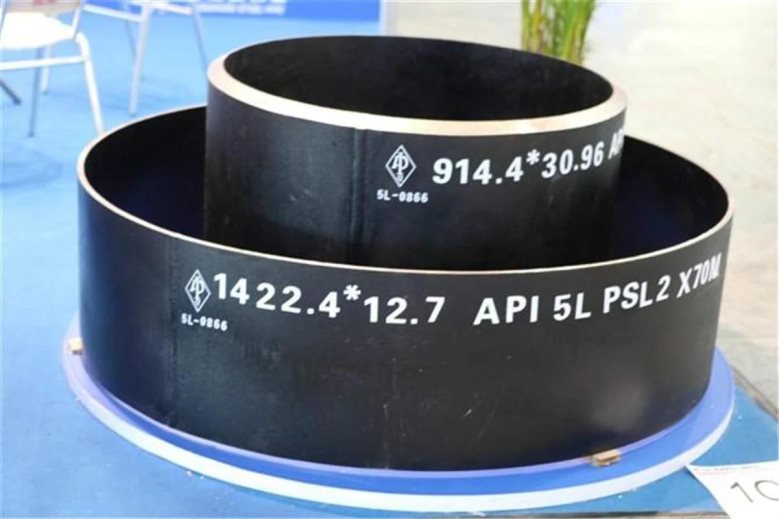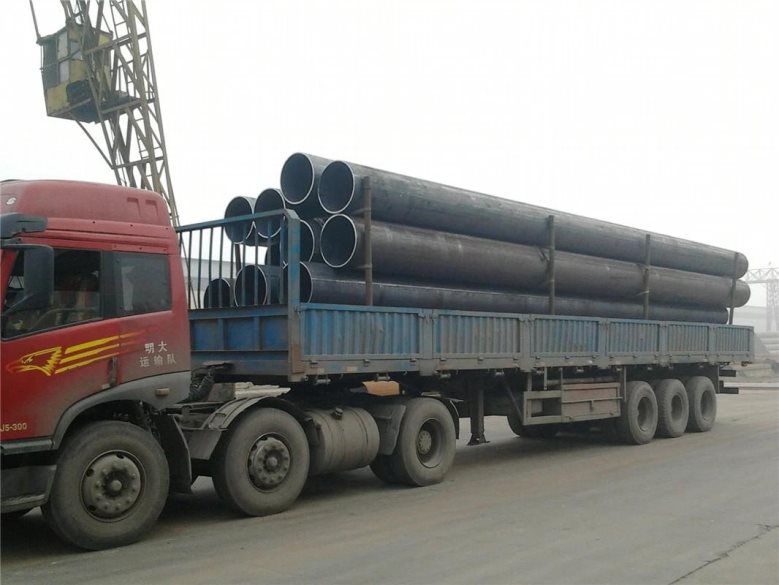


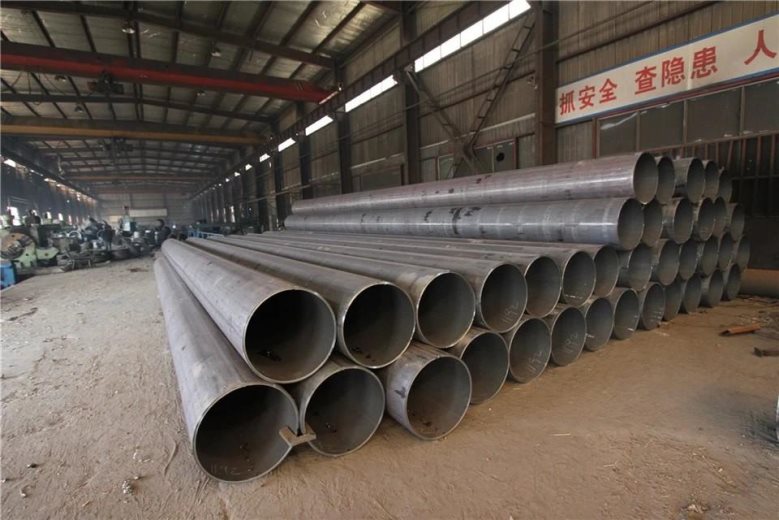
API 5L X60 X65 X70 PSL1 PSL2 SAW Steel PIPE LSAW

LSAW (Longitudinal Submerged Arc Welded), also knownSAWL, is the preferred manufacturing process for large-diameter, high-pressure pipelines requiring high dimensional accuracy and strength.
X60, X65, and X70, which are widely used in long-distance transmission and offshore projects.
Understanding the Grades: X60, X65, X70
The "X" in the grade designation standsX(minimum yield strength), and the number following it indicatesMinimum Yield Strength (SMYS)in kilopounds per square inch (ksi).
Grade | Min. Yield Strength | Min. Tensile Strength | Typical Application |
X60 (L415) | 415 MPa (60,000 psi) | 520 MPa (75,000 psi) | Medium-pressure transmission, moderate wall thickness. |
X65 (L450) | 450 MPa (65,000 psi) | 535 MPa (77,000 psi) | High-pressure onshore/offshore pipelines; good balance of strength and weldability. |
X70 (L485) | 485 MPa (70,000 psi) | 570 MPa (82,000 psi) | Ultra-high-pressure, long-distance transmission, and arctic conditions |
Note: Higher grades (X70) allow for thinner wall thickness at the same pressure, reducing overall project weight and welding costs, though material cost per ton may be higher.
Parameter | X60 (PSL2) | X65 (PSL2) | X70 (PSL2) |
Yield Strength (MPa) | 415 - 565 | 450 - 600 | 485 - 635 |
Tensile Strength (MPa) | 520 - 760 | 535 - 760 | 570 - 760 |
Yield Ratio (Max) | 0.93 | 0.93 | 0.93 |
Carbon (C) Max | 0.0024 | 0.0024 | 0.0024 |
Manganese (Mn) Max | 0.014 | 0.014 | 1.65% (varies) |
Sulfur (S) Max | 0.00015 | 0.00015 | 0.00015 |
Phosphorus (P) Max | 0.00025 | 0.00025 | 0.00025 |
X60 PSL1:Suitable for low-risk, on-land water or gas distribution where cost is the main factor.
X60/X65 PSL2: Ideal for cross-country oil and gas pipelines, high-pressure transmission, and sour service (if ordered with "S" suffix, e.g., X65MS) -7.
X70 PSL2: Required for very high-pressure gas transmission lines (e.g., Class 600 or 900), long-distance offshore flowlines, and Arctic regions requiring exceptional low-temperature toughness
Product Specification Levels: PSL1 vs. PSL2
PSL2 imposes much stricter chemical, mechanical, and testing requirements than PSL1
Requirement | PSL1 (Standard) | PSL2 (Enhanced) | Why It Matters for the Client |
Yield Strength | Minimum only | Minimum & Maximum | Prevents material that is too "hard" or brittle, ensuring ductility. |
Tensile Strength | Minimum only | Minimum & Maximum | Ensures uniform performance; critical for high-pressure gas lines. |
Y/T Ratio | Not specified | Max 0.93 | Ensures the pipe has enough strain hardening capacity to withstand ground movement or pressure fluctuations. |
Charpy Impact Test | Not required | Mandatory (Body & Weld) | Guarantees toughness, especially in low-temperature environments (arctic/offshore). |
Carbon Equivalent (CE) | Not specified | Maximum limits per grade | Ensures better weldability in the field without pre-heating or cracking. |
Chemistry (Max S & P) | S: 0.030%, P: 0.030% | S: 0.015%, P: 0.025% | Low impurities increase resistance to corrosion and cracking (HIC/SSC). |
NDT (Non-Destructive Test) | Basic | Stricter acceptance criteria | Guarantees internal soundness of the weld and base material. |
Key Features of SAW / LSAW Pipes
1.Large Diameter Range:Typically from 16 inches (406 mm) to 60 inches (1,524 mm) or larger, which ERW (Electric Resistance Welded) pipes cannot easily achieve.
2.Heavy Wall Thickness:Capable of wall thicknesses up to 60 mm, making it suitable for deep-water offshore pipelines.
3.High Dimensional Accuracy:The expansion process (after welding) ensures perfect roundness and straightness, crucial for field welding.
4.High Toughness:Due to the plate manufacturing process (TMCP - Thermo-Mechanical Controlled Processing), LSAW pipes offer excellent low-temperature toughness (CVN values) required for X65 and X70 grades.